If you've been running for a while and you're not seeing the progress you expected, there's a good chance you're running your easy runs too hard.
Zone 2 training — sometimes called conversational pace or aerobic base training — is the foundation of virtually every elite endurance athlete's program. The idea is simple: most of your weekly mileage should be at a pace that feels almost too easy.
**What is Zone 2, exactly?**
Your heart rate zones are typically broken into five levels, from very light (Zone 1) to maximum effort (Zone 5). Zone 2 sits around 60–70% of your maximum heart rate. At this intensity, your body primarily burns fat for fuel, which trains your aerobic system to become more efficient.
Running in this zone builds mitochondrial density in your muscle cells — more mitochondria means your muscles can process oxygen more effectively. Over months, your ability to hold a given pace at the same heart rate improves dramatically. Your easy pace gets faster, without any extra effort.
**How to find your Zone 2**
The simplest test: the talk test. You should be able to speak full sentences without gasping. If you can only get a few words out, you're already in Zone 3.
If you use a heart rate monitor, aim for roughly 180 minus your age in beats per minute. This is a rough guideline (Maffetone Method), but it's a good starting point.
A more precise method: do a 30-minute time trial, take your average heart rate in the final 20 minutes, and multiply by 0.8. That's the top of your Zone 2.
**The 80/20 rule**
Research consistently shows that elite endurance athletes do roughly 80% of their training at low intensity (Zone 1–2) and 20% at high intensity (Zone 4–5). Almost nothing in the middle.
Most recreational runners do the opposite: too hard on easy days, not hard enough on hard days. Everything blurs into a medium intensity that's too hard for recovery but not hard enough to build power.
**The hard part**
Zone 2 feels embarrassingly slow for most runners. You might pass walkers. Your ego will resist. But the data is clear: athletes who do 80% of their training in Zone 2 and 20% in high intensity consistently outperform those who train at medium intensity all the time.
Give it three months. Your easy pace will be faster than your current medium pace.
Want a plan built around your goals?
Free plans are a great start. For coaching that adapts to your life every week, this is what I do.
Uroš takes on the Arilje Trail 81K, tackling 81 kilometres, almost 3,500m of elevation and two demanding days of ultra running through the mountains of western Serbia.
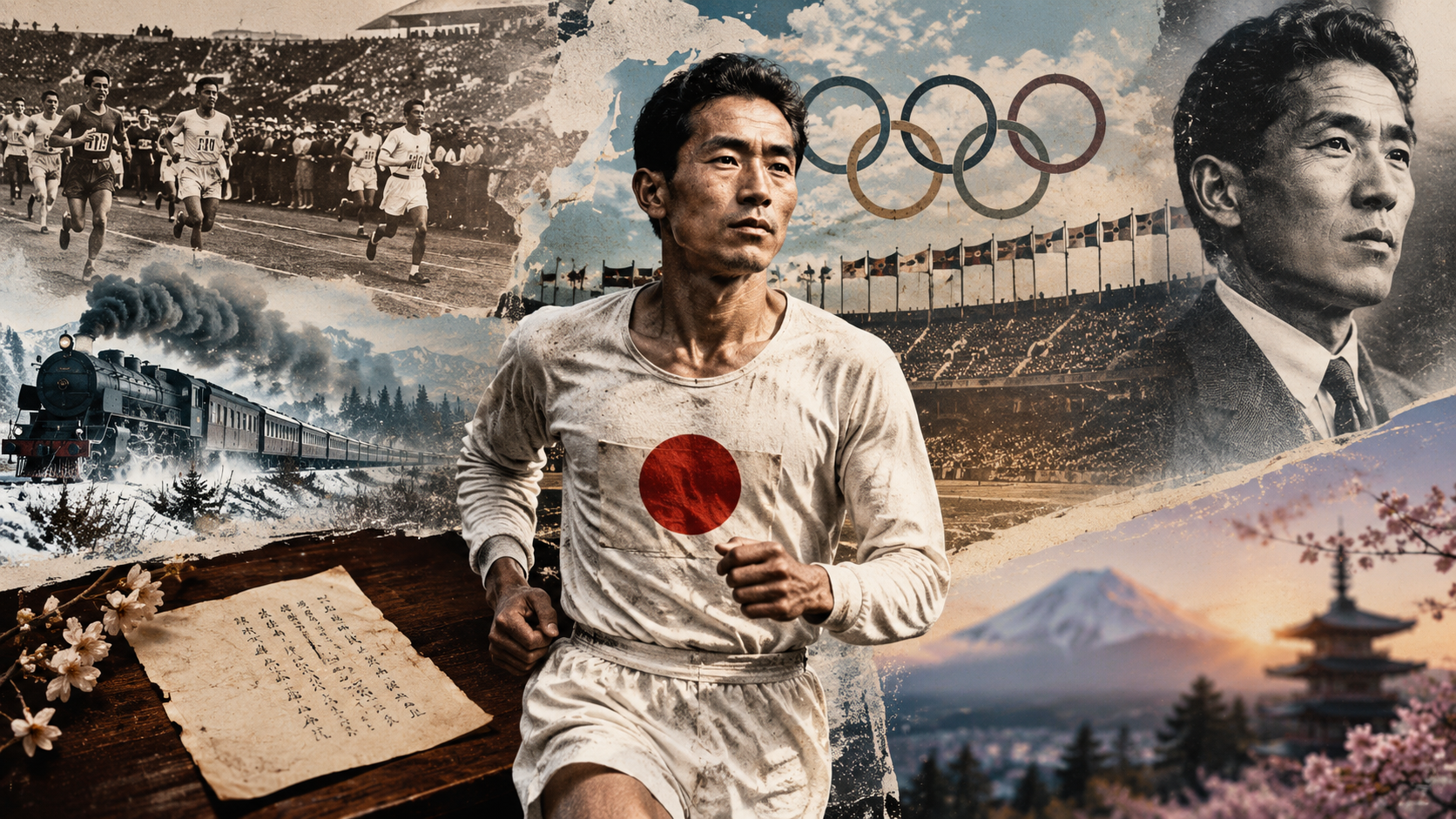
The story of Shizo Kanakuri is one of the strangest in Olympic history. A Japanese world-record holder traveled for weeks by ship and train to reach the 1912 Stockholm Olympics, only to collapse during one of the hottest marathons ever run. He disappeared without officially withdrawing, returned to Japan, and remained on Sweden's missing-person list for decades.
Then, 54 years later, he came back to finish the race.