There comes a point in every runner’s life when logic stops being part of the decision-making process.
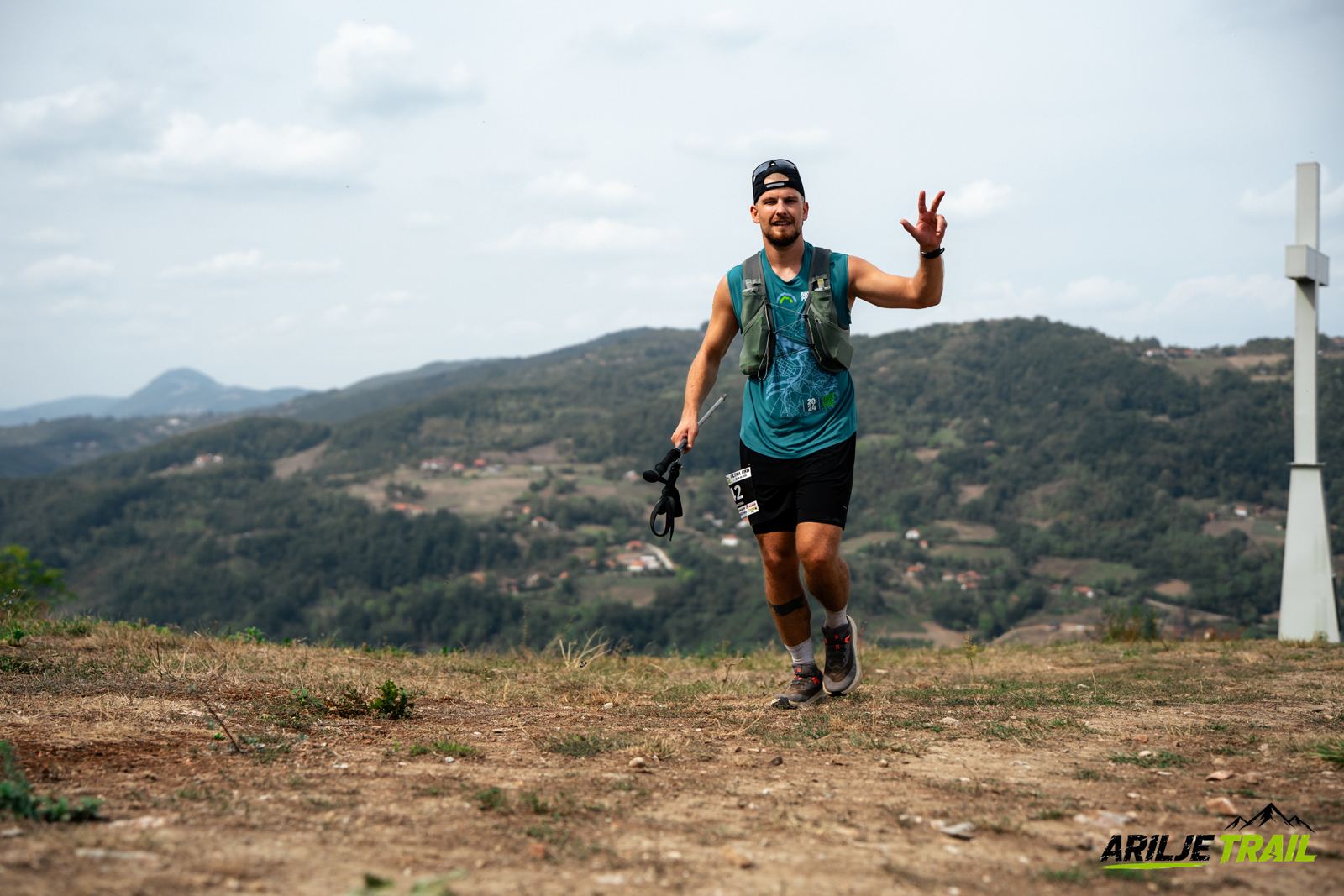
For Uroš, that moment came when he decided to take on the Arilje Trail 81K, an ultra-distance race featuring almost 3,500 metres of elevation gain across two days.
What started as a slightly questionable idea quickly became a real challenge: two days of running, demanding terrain, long climbs, technical descents, and more than a few moments when he would have to find out what he was really capable of.
This is Uroš's story of taking on the Arilje Trail 81K, managing the race across two very different days, and finding out just how far he could push himself.
A Note from Alex
Uroš came into this race with one very simple question: Can I handle 81 kilometres over two days, with almost 3,500 metres of elevation gain?
My job as his coach was not to give him a heroic race plan. It was to make sure he respected the distance, the terrain and, most importantly, the second day.
Uroš already had ultra experience behind him, but this was a significant step up. The distance, elevation and two-day format meant that the biggest challenge wasn't simply having the fitness to cover the kilometres. It was managing the effort when he felt good, resisting the temptation to spend too much energy early, and understanding that the race was still waiting for him the following morning.
That is exactly why we focused on pacing, fueling and effort management before the race. Uroš had the fitness to take on the challenge, but executing the plan over two very different days was going to be the real test.
And, as you'll see from his story, there were moments when things didn't go exactly according to plan.
But that's what makes a race report worth reading.
Race Week and Race Morning as One
The entire week before the race was focused on getting ready for the days ahead. Lower-intensity training, plenty of water and plenty of carbohydrates. Although, to be fair, the last part is pretty much my everyday life, whether I am carb-loading or not.
I arrived in Arilje early on race morning, sometime before 6 a.m., hoping to grab a pastry and some chocolate milk on the way.
Unfortunately, not a single bakery was open.
So, I had to settle for bananas, nuts and an isotonic drink.
I know what some of you are probably thinking: “You actually ended up eating better and healthier than you planned.”
Sure. But where is the fun in that?
I picked up my race number, collected what was probably the richest race package I have ever received, and settled into the accommodation provided for the ultra runners.
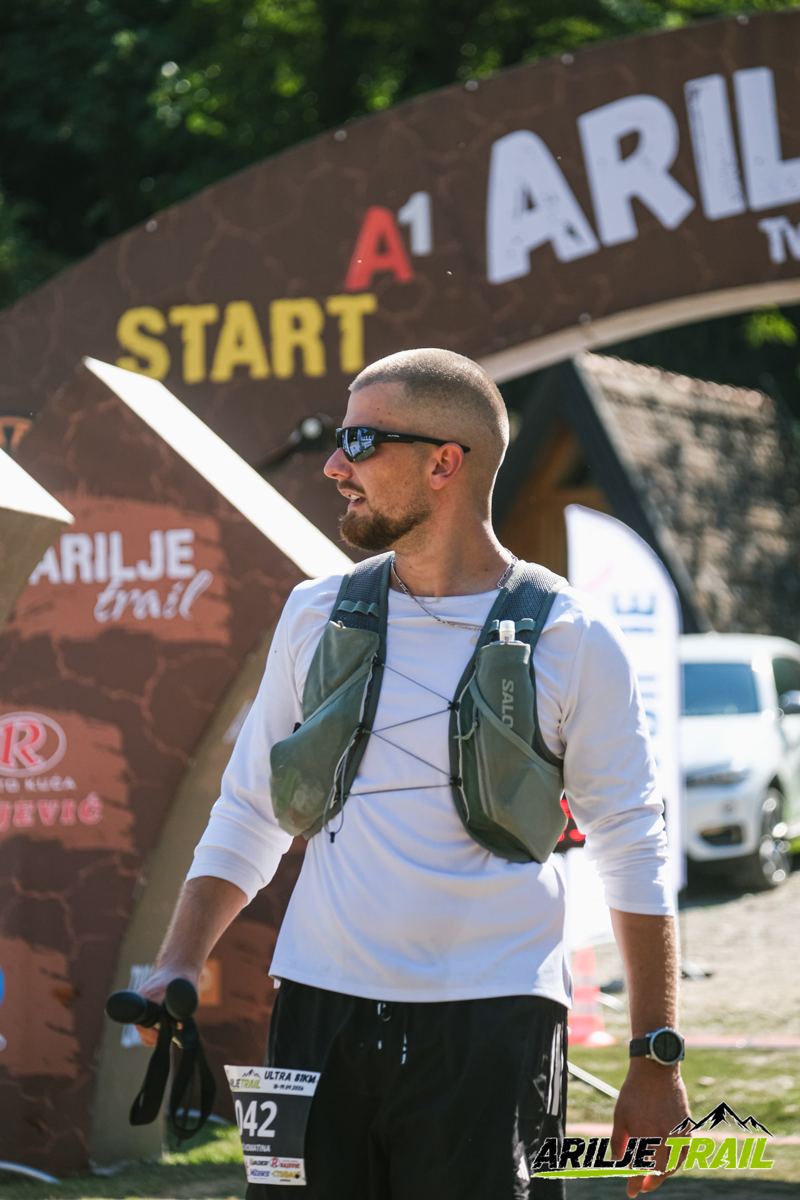
Time to change, attach the number, fill my bottles and put on my vest.
At that point, everything became real.
There was no more room for all the doubts and questions I had been asking myself over the previous few days. Can I actually do this? Am I ready?
There was only one thing left to do: face the opponent I would be fighting for the next two days.
The First Section
A few days before the race, I had a thorough conversation with Alex, and he prepared me completely for what was ahead. Although the terrain itself was unfamiliar to me physically, nothing came as a surprise.
The vest was on my back with all the necessary equipment. Shoes were on my feet. Poles were in my hands.
My Garmin confirmed that the GPS signal was there and everything was ready.
8 a.m. arrived and we were all waiting for the start.
Well… it wasn't quite that dramatic.
The race was actually delayed by ten minutes. XD
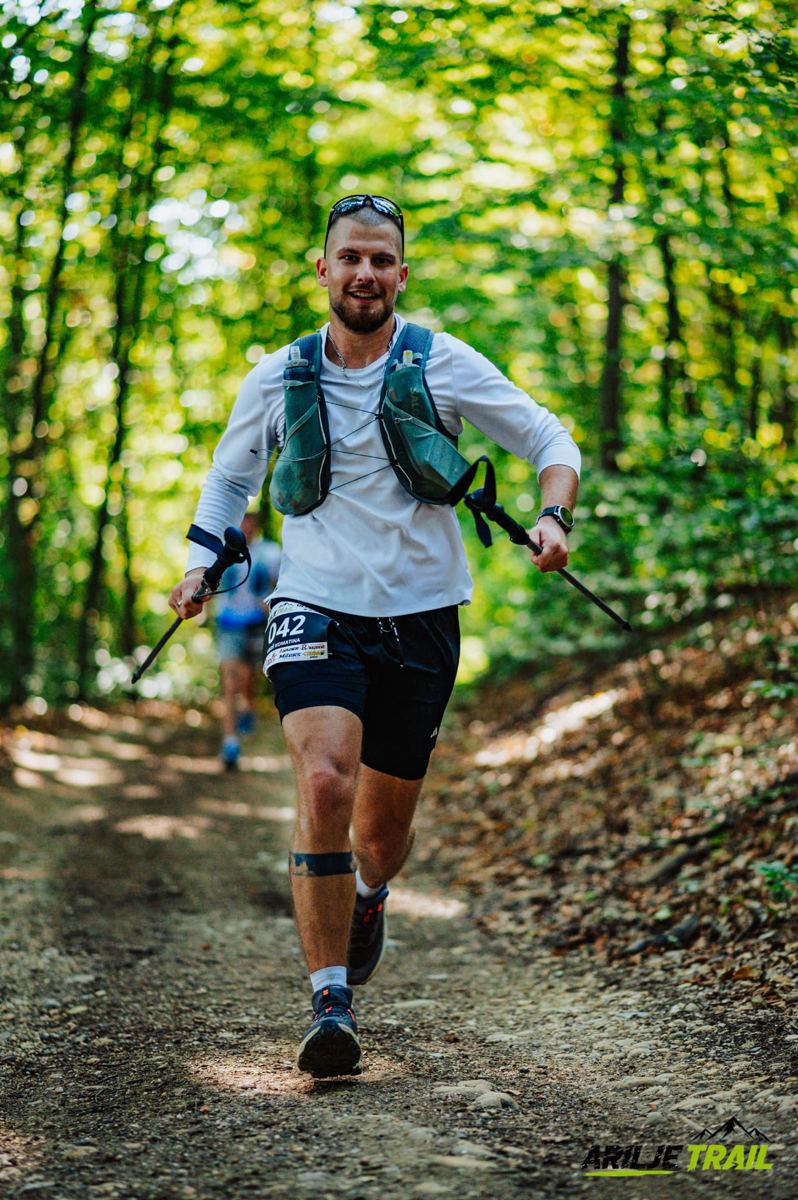
In front of me were 50 km and around 1,800 metres of elevation gain. Even though it was the longer section of the Arilje Trail 81K, this was the easier part of the race in terms of terrain. The climbs and descents were longer, giving my legs enough time to adapt and prepare for each change.
Everything was working exactly as it should.
My body was responding well and my legs felt strong.
At kilometre 21, I was around 30 minutes ahead of the time Alex and I had expected. That was when I decided to slow down and run the remaining sections of the first day more conservatively, saving as much energy as possible for what was coming tomorrow.
The first real problems appeared around kilometre 40.
The sun was beating down on me. I was hungry, and I kept expecting the next aid station to be just around the corner.
I crossed the suspension bridge over the Rzav River and passed one of the most beautiful swimming spots I had ever seen in Serbia.
All I could think about was dried meat and Coke.
The aid station, however, was still 3 km away.
That hit me hard.
I lost a lot of energy, and the food I was carrying with me just wasn't enough. I needed something stronger.
At kilometre 43, I spent a few extra minutes at the aid station. There was still a long way to go, and the goal wasn't to destroy myself on day one and pay for it the next day.
When I finally saw Hotel Mlinarev San and realised there was less than a kilometre left, I was the happiest man in the world.
The final third of the day had been brutally hot, and all I could think about was taking everything off and cooling down.
The end of day one meant only two things to me:
real food and my favourite drink. ;)
Time to rest properly and get ready for tomorrow.
Feeling great at kilometre 21? That's when the race plan matters most.
Uroš slowed down while he still felt strong, and that saved his second day. I build every ultra plan around pacing, fueling and the day after, not just the start line.
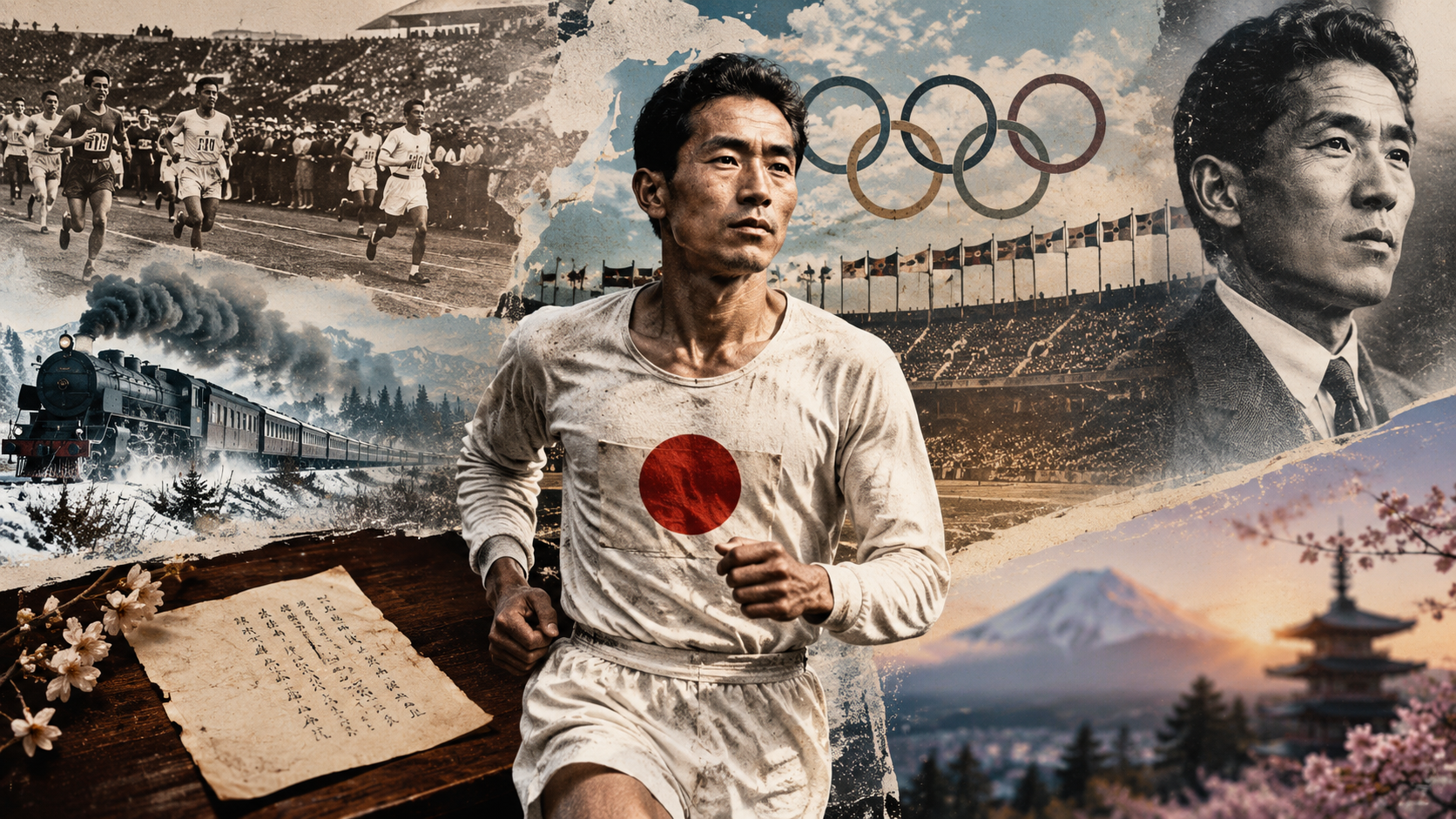
The story of Shizo Kanakuri is one of the strangest in Olympic history. A Japanese world-record holder traveled for weeks by ship and train to reach the 1912 Stockholm Olympics, only to collapse during one of the hottest marathons ever run. He disappeared without officially withdrawing, returned to Japan, and remained on Sweden's missing-person list for decades.
Then, 54 years later, he came back to finish the race.
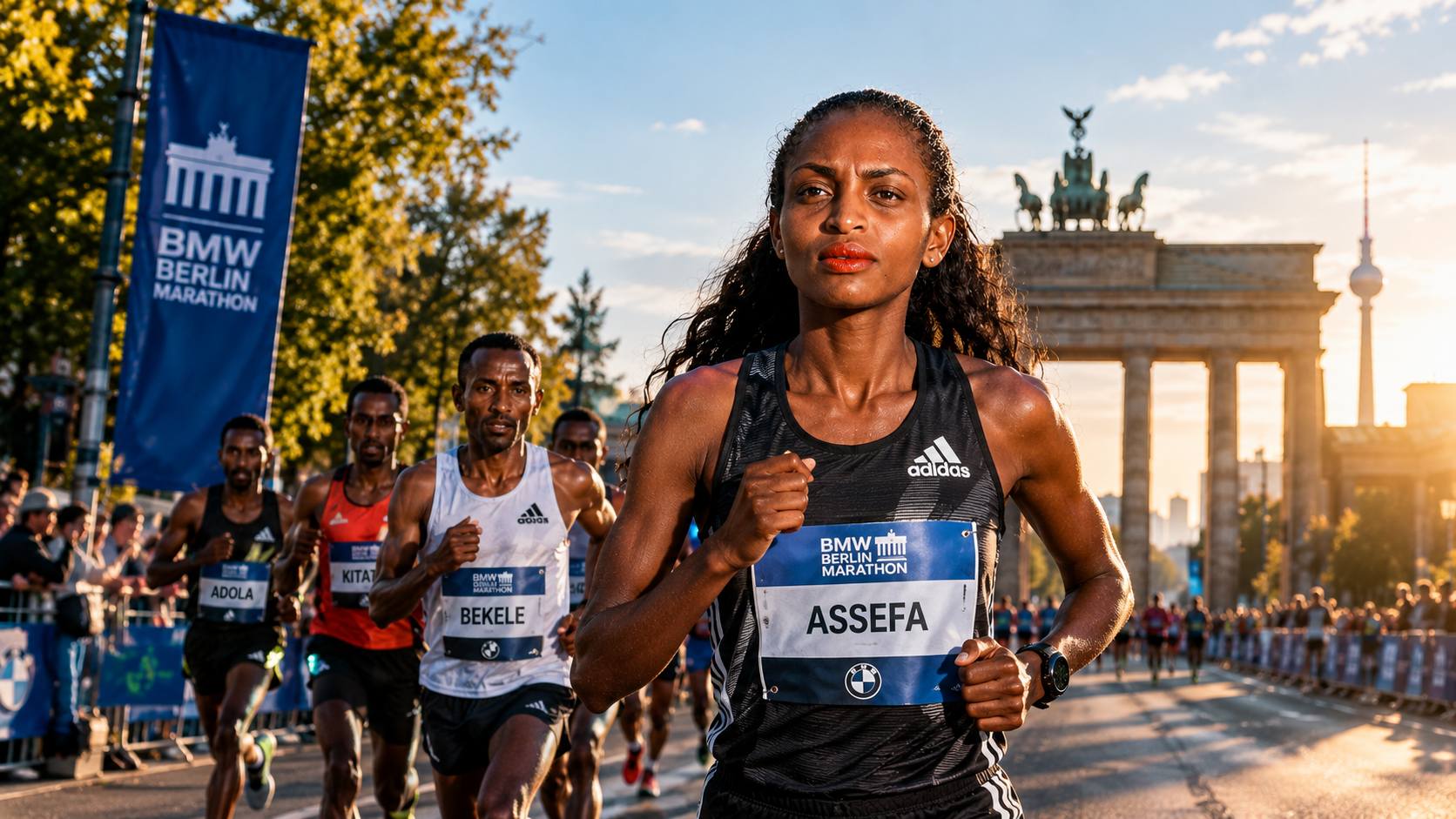
A complete preview of the Berlin Marathon 2026 elite field, including Tigst Assefa's world-record attempt, Sawe's withdrawal, Geay, Adola, Kitata, Barega and more.