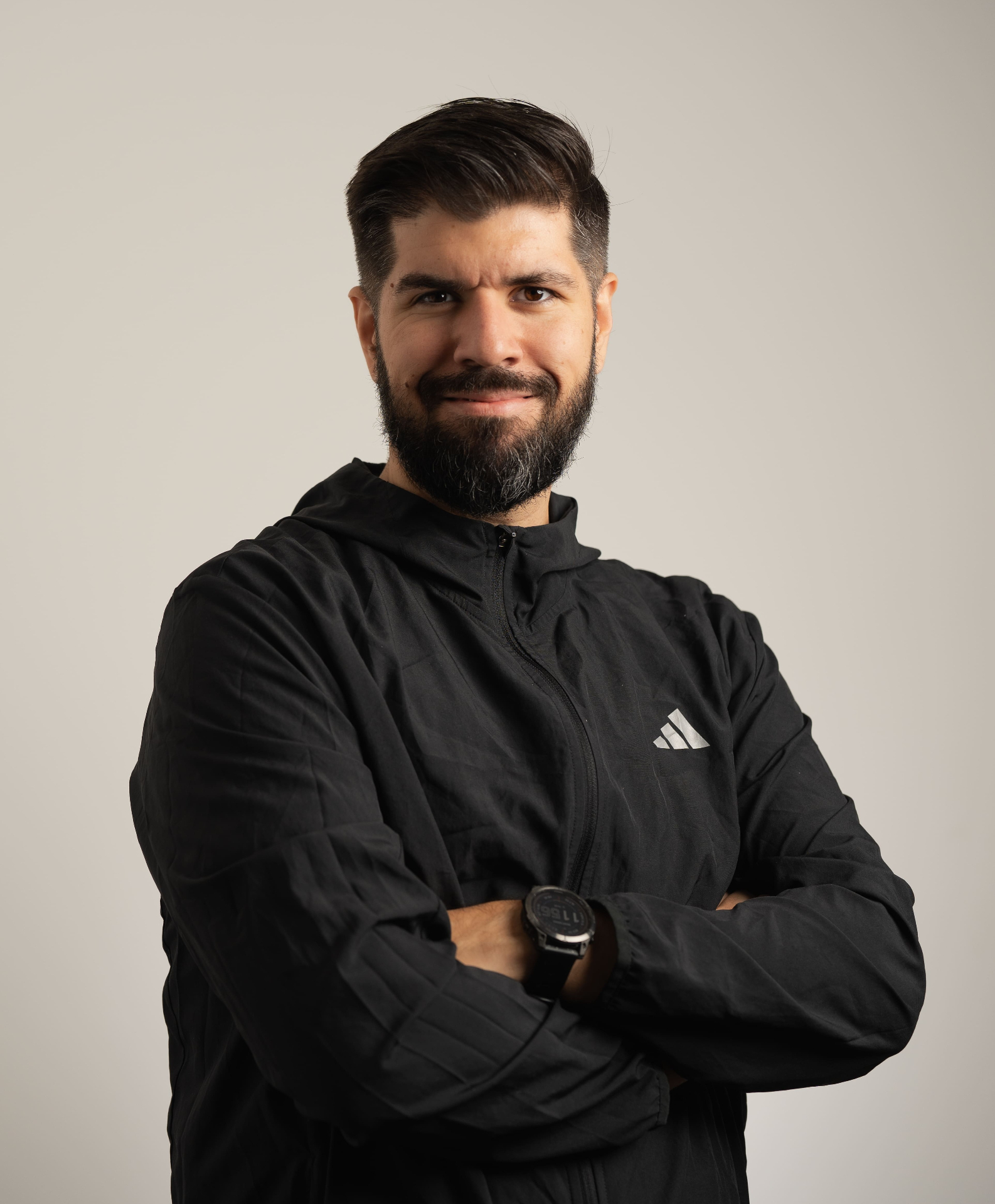
Uroš Conquers Arilje Trail 81K: A 3,500m Ultra Race Report
Uroš takes on the Arilje Trail 81K, tackling 81 kilometres, almost 3,500m of elevation and two demanding days of ultra running through the mountains of western Serbia.
By Alex, UESCA certified running coach | 21 Sept 2026 | 7 min read

The Berlin Marathon has a reputation for producing fast times, world records and some of the most memorable marathon performances in history.
The 2026 edition looks set to continue that tradition.
The elite field features several of the fastest marathon runners in the world, but the biggest storyline is undoubtedly Tigst Assefa. The Ethiopian star is returning to Berlin with a very specific target: the women's overall marathon world record of 2:09:56.
On the men's side, the race has changed significantly in the final weeks. World-record holder Sabastian Sawe withdrew because of injury, while Kenenisa Bekele was also forced to withdraw after being added to the field.
So, who is actually left to watch?
Tigst Assefa arrives in Berlin as the biggest name in the women's elite field.
She already has a special relationship with this race. In 2023, Assefa ran 2:11:53 in Berlin, breaking the women's world record at the time.
Since then, the world record has moved again.
Ruth Chepngetich currently holds the overall women's marathon world record with 2:09:56, set in Chicago in 2024.
Assefa has already shown that she can run at an extraordinary level. In April 2026, she improved the women's-only marathon world record to 2:15:41 in London.
Now she returns to Berlin with the overall world record in her sights.
To run 2:09:56, Assefa would need to average approximately 3:05 per kilometre for the entire 42.195 km.
That is an extraordinary pace.
But Berlin is probably one of the places where such a performance makes sense to attempt.
Assefa won't be running alone.
The women's field includes several athletes with world-class personal bests and previous experience at the front of major marathons.
Rosemary Wanjiru enters the race with a personal best of 2:16:14 and is also the defending Berlin Marathon champion.
Dera Dida finished second in Berlin in 2025 and has a personal best of 2:18:32.
Bedatu Hirpa has run 2:18:27, while Zeineba Yimer has a 2:18:47 personal best.
Misgane Alemayehu has run 2:19:08 and Bekelech Gudeta has a personal best of 2:19:39.
The depth is impressive. According to World Athletics, seven women in the field have personal bests under 2:20, while 14 have run under 2:22.
That gives Berlin a very strong women's field even before considering what Assefa might attempt.
The men's race looked very different when Sabastian Sawe was initially announced for Berlin.
Sawe ran 1:59:30 in London in April 2026, becoming the first athlete to break the two-hour barrier in a record-eligible marathon.
But an injury forced him to withdraw from Berlin in August.
That leaves a very open men's field.
Among the leading names are:
There are also several strong Japanese marathoners in the field.
In total, the official Berlin preview lists 26 men with personal bests under 2:08.
So while there isn't a single obvious replacement for Sawe, the depth of the field is still extremely high.
Free plans are a great start. For coaching that adapts to your life every week, this is what I do.
See coaching optionsOne of the most interesting names on the men's start list is Guye Adola.
Adola made his marathon debut in Berlin in 2017 and immediately produced one of the fastest marathon debuts ever recorded at the time.
He ran 2:03:46 and finished second behind Eliud Kipchoge.
Four years later, Adola returned to Berlin and won the race.
He also finished fourth in Berlin in 2025.
And his 2026 season has already included another major performance: he won the Rotterdam Marathon in 2:03:54.
So Adola isn't simply another athlete with a fast personal best.
Berlin is a race where he has already performed at the highest level.
Another name to watch is Shura Kitata.
The Ethiopian has already won major marathons during his career, including the London Marathon in 2020.
In 2026, he won the Seville Marathon in 2:03:59, setting a new personal best.
That makes him one of the few athletes in Berlin with a sub-2:04 personal best.
If the pace becomes aggressive, Kitata has the experience and speed to stay involved deep into the race.
Selemon Barega brings a slightly different story.
Before becoming a marathoner, Barega was one of the world's best track athletes.
He won the Olympic 10,000m title at the Tokyo 2020 Olympics in 2021.
He then moved up to the marathon.
His marathon debut came in Seville in 2025, where he ran 2:05:15 and won the race.
In Tokyo in 2026, he improved again, running 2:05:00.
Berlin will therefore be another interesting test of how far Barega can take his marathon career.
His track background gives him a very different profile from many of the traditional marathon specialists in the field.
Bekele was one of the most intriguing names associated with this year's race.
The Ethiopian legend was added to the Berlin field late and was set to return to a race where he has twice been a winner.
However, Bekele subsequently withdrew because of an Achilles injury.
That means he will not be part of the 2026 elite race.
It is still worth mentioning because his late addition and subsequent withdrawal changed the story around the men's field considerably.
There is a reason why Berlin constantly appears in conversations about world records.
The course is fast, flat and historically associated with record-breaking performances.
From 2003 through 2022, Berlin produced eight consecutive men's marathon world records.
The most recent was Eliud Kipchoge's 2:01:09 in 2022.
Kipchoge's mark remains the Berlin course record.
And while the men's world record is no longer held by a Berlin performance, the race continues to be one of the most obvious places to target a very fast marathon.
The women's race could be particularly interesting this year because Assefa isn't simply chasing another major victory.
She is chasing 2:09:56.
For me, the biggest question is how aggressively Assefa approaches the world-record pace.
Running 2:09:56 means maintaining roughly 3:05/km for the entire marathon.
The first half will therefore be extremely important.
If the pace is close to record pace through 10 km, 15 km and halfway, the question becomes whether Assefa can maintain it through the final 10 kilometres.
The men's race is a different story.
With Sawe out, there is no athlete on the start list with a personal best faster than 2:03:00.
That could make the race much more tactical, or it could simply mean that several athletes see an opportunity to attack the pace themselves.
Adola, Kitata, Geay and Barega all have legitimate reasons to believe they can be part of the front group.
And with 26 men under 2:08, there is plenty of depth behind them.

That's what makes the 2026 Berlin Marathon particularly interesting.
The women's race has a very clear central storyline: can Tigst Assefa challenge Ruth Chepngetich's 2:09:56 world record?
The men's race is much more open after Sawe's withdrawal.
There are several athletes with the speed and experience to win, but no obvious replacement for the world-record holder.
And that's exactly what makes marathon racing so interesting.
On Sunday, we'll find out whether Berlin produces another historic performance.
Maybe Assefa will get the world record.
Maybe one of the men's contenders will produce the race of his career.
Or maybe the marathon will simply remind us that 42.195 kilometres has a habit of ignoring expectations.
Either way, Berlin 2026 is one race worth watching from the start.
Date: September 27, 2026
Distance: 42.195 km
Location: Berlin, Germany

Alex, UESCA Certified Running Coach
15 years running. Coaching runners from 5K to 100K ultramarathon.
Work with Alex
Uroš takes on the Arilje Trail 81K, tackling 81 kilometres, almost 3,500m of elevation and two demanding days of ultra running through the mountains of western Serbia.

The story of Shizo Kanakuri is one of the strangest in Olympic history. A Japanese world-record holder traveled for weeks by ship and train to reach the 1912 Stockholm Olympics, only to collapse during one of the hottest marathons ever run. He disappeared without officially withdrawing, returned to Japan, and remained on Sweden's missing-person list for decades. Then, 54 years later, he came back to finish the race.